
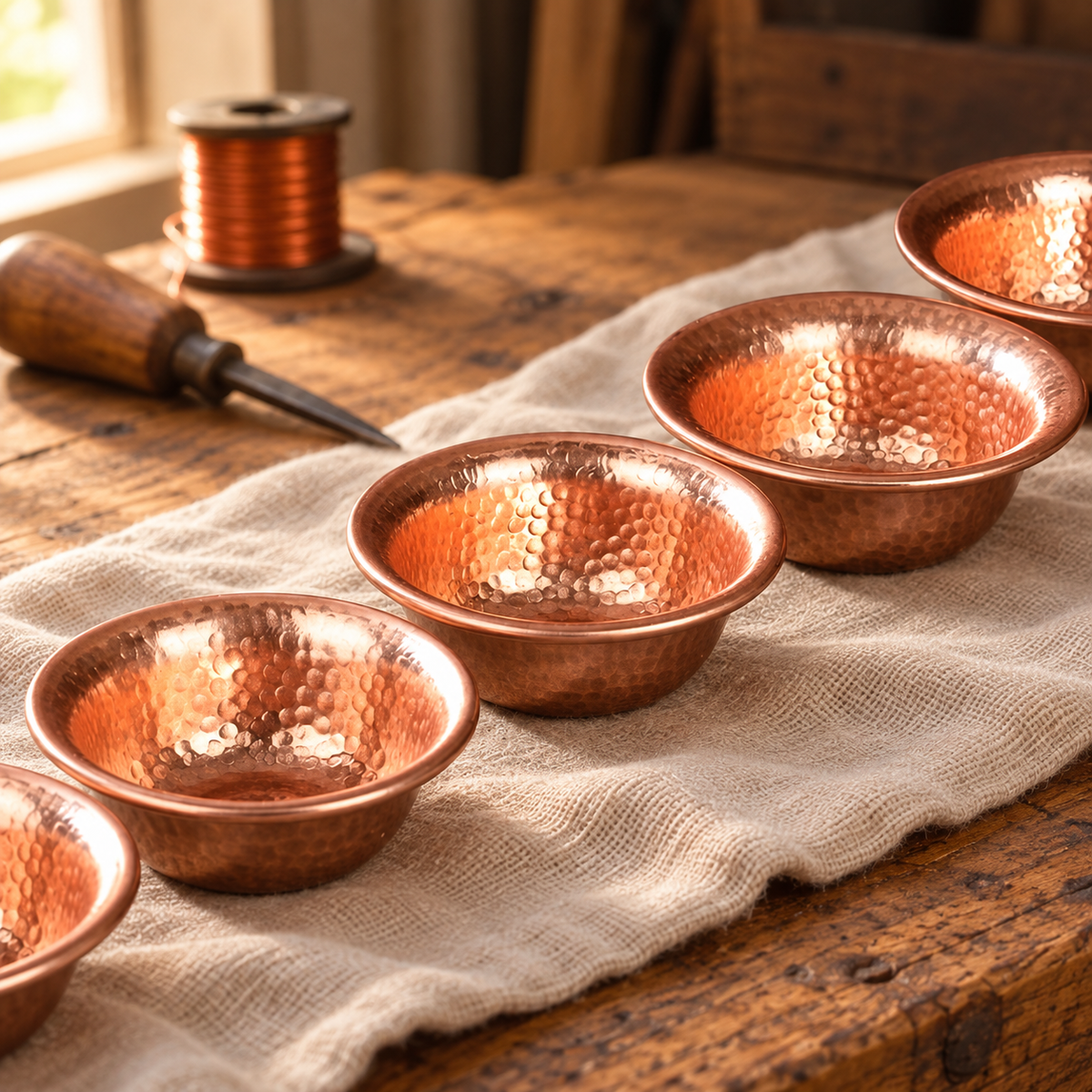
Copper decor looks best when used sparingly: two or three copper pieces per room, combined with wood, linen, ceramics, and plenty of warm light. Place them at different heights—a bowl on the table, a vessel on the shelf—instead of lining them all up together. This keeps copper as an accent rather than making it the theme of the whole room.
Key takeaways
- Copper is a warm color—it pairs well with earth tones, green, cream, terracotta, and dark wood.
- Two or three copper objects per room are enough; more can quickly feel cluttered.
- Warm light (2700 Kelvin) makes copper glow, while cool light makes it look dull and brownish.
- Real copper develops a darker patina over time—copper-colored painted decor does not.
- A soft cloth and occasional polishing are all it takes; dishwashers and abrasive cleaners are off-limits.
Why does copper work so well in living spaces?
Copper (chemical symbol: Cu) is one of the few colored metals. While stainless steel and chrome reflect light with a cool cast, copper absorbs it and reflects it back with a reddish-golden glow. That’s exactly why rooms with copper accents instantly feel warmer—especially in the darker months, when you’re already relying on candles and reading lamps.
There’s another reason: copper is a living material. It doesn’t stay the same. Over the months, its surface darkens and takes on a calmer, deeper color. That’s an advantage for decor—a copper object that has stood on a shelf for two years looks like it belongs there, not like something brand new.
Which colors go well with copper decor?
Copper sits somewhere between red, orange, and brown. Anything in the same warm color family works without a second thought. Cool-toned counterparts make things more interesting.
Easy combinations
Cream, beige, sand, and unbleached linen make copper glow without competing with it. Dark wood—walnut, smoked oak—echoes its reddish hue. Terracotta and rust are practically relatives.
Bold combinations
Deep green (sage, forest green, eucalyptus) is copper’s strongest partner: green and red are opposite each other on the color wheel, creating contrast without harshness. Teal and dark blue-gray work well, too. I’d be more cautious with pure white and high-gloss gray—copper can quickly look out of place there.
Which room is right for copper?
In short: anywhere you spend a lot of time and the lighting is warm. Specifically:
Living room
A shallow copper bowl on the coffee table—as a catchall for keys, candles, or dried twigs. You could add a copper detail on the light fixture, too. That’s all you need.
Bedroom
A small copper bowl on the bedside table makes a great place to leave jewelry: rings and necklaces go in there at night instead of on the floor. A practical bonus—you’ll see right away in the morning what you want to wear.
Kitchen and dining table
Copper and food have a long history together, from French copper pans to Moscow Mule mugs. For decor, a fruit bowl or copper jug on the countertop is enough. Avoid placing it right next to stainless steel appliances—the contrast is rarely flattering.
Bathroom and hallway
Copper goes surprisingly well with natural stone and wood in the bathroom. In the hallway, a bowl for keys and odds and ends is all you need. In both rooms, wipe off any splashes and the surface will stay even.
How much copper is too much?
The most common disappointment when decorating with copper comes not from using too little, but too much. Here’s a simple sequence that reliably works:
- Choose one statement piece. The largest object—a bowl, vase, or light fixture—determines where the eye lands.
- Add one or two complementary pieces. Make them noticeably smaller and place them at different heights so they don’t form a row.
- Leave some space. Spread the copper pieces around the room instead of grouping them on one surface.
- Break up the shine with matte materials. Linen, ceramics, wood, or paper soften the gleam.
- Check the lighting. Turn the lights on in the evening and take another look—artificial light will show whether the combination works.
Real copper or copper-colored coating—what’s the difference?
Both sit side by side on decor shelves, and in photos they look almost the same. In everyday use, they don’t:
| Feature | Real copper | Copper-colored coating |
|---|---|---|
| Weight | Heavy, cool to the touch | Lightweight, often sheet metal or plastic |
| Color over time | Darkens and develops a patina | Stays the same; can chip |
| Surface | Can be polished back to a shine | Scratches reveal the color underneath |
| Edges | Often hand-hammered and slightly irregular | Uniformly machine-made |
| Magnet | Does not stick | Often sticks (iron core) |
The magnet test is the quickest: pure copper is not magnetic. If a fridge magnet sticks, there’s another metal underneath. All Cupria Schmuck pieces are made from 99.9% pure copper and handcrafted—bracelets and rings in adjustable sizes, shipped to Germany and Austria.
How do you care for copper decor day to day?
Less than most people think. Dust it with a soft, dry cloth and wipe off water splashes right away—that’s enough for months. If the surface gets too dark for your liking, a paste of lemon juice and salt or a copper polish will restore its shine in just a few minutes; rinse thoroughly and dry afterward.
Don’t put it in the dishwasher, and don’t use abrasive cleaners or steel wool. And if you like the patina, simply leave it alone. You’ll find detailed instructions on our copper care page, and our post How to care for copper jewelry explains how to do the same for jewelry.
Frequently asked questions
Can you mix copper with gold and silver in one room?
Yes, if you choose one as the main color. Copper and brass are close in color and work well together; silver and chrome look cool by comparison and need a little space. The same principle applies to jewelry, by the way—find out more in our copper jewelry styling ideas.
Why is my copper decor getting blotchy?
Copper reacts with air, moisture, and skin oils, which can cause uneven dark patches, often appearing first where the piece is handled. This is normal and not a material defect. Polish the entire surface once to even out the color again.
Can copper decor be left outdoors?
For a short time, yes; not really for the long term. Outdoors, copper develops its familiar green patina over the years—beautiful on church roofs, rarely wanted on a patio bowl. If you want to keep its copper-red color, bring the pieces inside when it rains.
Which copper pieces are best for beginners?
A bowl is the most versatile piece: it works as a fruit bowl, key dish, jewelry bowl, or holder for incense sticks, and you can move it around whenever you like. At Cupria Schmuck, you’ll find one in the Wellness & Home collection, alongside drinking bottles and other home accessories.
Bring copper into your home
99.9% pure copper, handcrafted—currently buy one, get one FREE.
Browse the collection

